A home can look perfectly maintained from the outside while a small problem remains hidden along its roofline. A little collection of leaves, a loose gutter bracket, or a blocked downspout might not seem serious at first. However, when heavy rain arrives, these minor issues can quickly become expensive problems.
Gutters have an important responsibility. They collect rainwater from the roof and direct it away from the foundation, exterior walls, windows, and landscaping. When they stop working properly, water can overflow, collect around the house, damage paintwork, and even contribute to basement moisture or foundation problems.
This is why residential gutter maintenance deserves regular attention rather than being treated as an occasional cleaning task. Proper care involves inspecting the entire drainage system, recognizing seasonal challenges, removing debris, checking water flow, and repairing minor damage before it becomes more serious.
Whether you own a small single-story property or a large family home, understanding how gutters work and when they need attention can make a meaningful difference. With a consistent maintenance routine, you can extend the life of your gutter system and protect your property throughout the year.
Understanding the Importance of Residential Gutter Maintenance
Gutters are designed to manage rainwater, but their performance depends on several connected components. These include the gutter channels, joints, hangers, end caps, downspouts, and drainage outlets. If one component fails, the entire system can become less effective.
Regular residential gutter maintenance helps homeowners identify problems before water starts entering unwanted areas. For example, a blocked downspout may cause water to collect inside the gutter. During heavy rainfall, that water can spill over the edges and run down exterior walls.
Over time, repeated exposure to moisture can damage wooden fascia boards, encourage mold growth, stain siding, and weaken certain building materials. Water that drains too close to the foundation may also increase the risk of moisture entering basements or crawl spaces.
Another important benefit is protecting the roofline. When gutters remain clogged, standing water and accumulated debris can add unnecessary weight. In colder climates, trapped moisture may freeze and contribute to ice buildup.
A well-maintained drainage system also protects outdoor spaces. Instead of allowing concentrated streams of water to fall directly onto flowerbeds, pathways, and soil near the house, functioning gutters help move rainfall toward appropriate drainage areas.
The goal is not simply to keep gutters looking clean. It is to make sure every part of the system performs its intended job.
How Often Should Residential Gutters Be Inspected?
There is no single inspection schedule that works for every property. The right frequency depends on nearby trees, roof design, local weather, gutter material, and the amount of debris your home receives.
For many residential properties, inspecting gutters at least twice a year is a practical starting point. Spring and autumn are particularly useful because they follow major seasonal changes that commonly affect drainage systems.
Homes surrounded by pine trees, large deciduous trees, or other vegetation may require more frequent checks. Pine needles, seeds, small branches, and leaves can accumulate quickly, especially after windy weather.
Residential gutter maintenance should also include additional inspections after severe storms. Strong winds can loosen brackets, shift gutter sections, or push branches into the drainage channels. Heavy rainfall may reveal leaks that were not obvious during dry weather.
Signs Your Gutters Need Immediate Attention
Sometimes a homeowner does not realize there is a gutter problem until water begins overflowing during rainfall. Fortunately, several warning signs can help identify trouble earlier.
Water spilling over the gutter edges is one of the clearest indicators of a blockage or drainage problem. Gutters that appear uneven or sagging may have loose hangers, excessive debris, or damaged support points.
You might also notice water stains beneath the roofline, peeling exterior paint, damp fascia boards, or soil erosion around the foundation. These signs deserve investigation because they may indicate that rainwater is not being directed properly.
Another warning sign is water dripping from gutter joints when it rains. This may suggest separated connections, worn sealant, or corrosion.
Pay attention to plants growing inside gutters as well. Small seedlings often indicate that organic debris has remained in the channels long enough to collect moisture and support plant growth.
Seasonal Residential Gutter Maintenance: What to Do Throughout the Year
Every season creates different challenges for residential drainage systems. A maintenance routine that works during summer may not be sufficient during autumn or winter. Understanding these seasonal differences helps homeowners prepare before weather conditions become difficult.
Spring: Check Winter Damage and Prepare for Rain
Spring is an excellent time to inspect gutters after winter weather. Snow, ice, freezing temperatures, and strong winds can place additional stress on gutter systems. Even when damage is not immediately visible, small problems may have developed around joints, brackets, and downspouts.
Start by removing leaves, twigs, dirt, and other debris that accumulated during the colder months. Check whether the gutters remain firmly attached to the fascia boards and look for sections that have shifted out of position.
Spring rain can reveal problems that stayed hidden throughout winter. Watch the system during rainfall, if conditions allow you to observe safely from the ground. Water should travel smoothly toward the downspouts without overflowing or collecting in low sections.
It is also a good time to inspect the roof edge and fascia boards. Soft wood, peeling paint, and dark moisture marks may indicate prolonged water exposure.
Effective spring residential gutter maintenance prepares the drainage system for seasonal rainfall and helps prevent existing winter damage from becoming worse.
Summer: Address Heat, Storms, and Minor Repairs
Summer often brings intense sunlight, thunderstorms, and sudden changes in weather. Although gutters may appear less demanding during dry periods, this season is useful for checking their structural condition.
High temperatures can affect certain gutter materials and sealants. Expansion and contraction may gradually place pressure on joints and connections. Inspect exposed sections for gaps, loose fasteners, cracks, and signs of corrosion.
Summer storms can also deposit branches, dust, and roofing debris inside gutters. A property with mature trees may experience unexpected blockages even when autumn is still several months away.
Use this season to repair minor problems identified during spring inspections. Replacing damaged brackets, tightening appropriate fasteners, and addressing small leaks can help prevent more complicated repairs later.
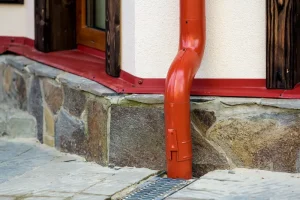
Another useful step is checking where downspouts release water. Their outlets should direct water away from the foundation and toward a suitable drainage area. Simply allowing water to fall beside the house can create persistent moisture problems.
Autumn: Remove Leaves Before They Become a Problem
Autumn is one of the most important seasons for gutter care, particularly in neighborhoods with deciduous trees. Falling leaves, small branches, seeds, and other organic materials can quickly fill gutter channels.
When wet leaves remain inside gutters, they become heavier and may form compacted blockages. Water then struggles to move toward the downspouts, increasing the possibility of overflow.
Cleaning should be scheduled according to local leaf fall rather than relying on one fixed date. Some properties need more than one autumn cleaning, especially when several trees surround the roof.
During this inspection, check the entire gutter system for sagging, loose joints, and drainage restrictions. Make sure downspouts are clear before temperatures begin to fall.
Autumn residential gutter maintenance is especially important because it prepares the drainage system for winter rain, snow, and freezing conditions.
Winter: Prevent Ice Buildup and Monitor Drainage
Winter presents different challenges, particularly in regions that experience freezing temperatures. Water trapped inside clogged gutters can freeze, expand, and place additional pressure on gutter sections and connections.
Ice dams may also develop along roof edges when roof temperatures vary and snow melts and refreezes. Their causes often involve heat loss through the roof, inadequate ventilation, and temperature differences across the roof surface. Blocked gutters can make drainage conditions worse, but cleaning alone does not solve every ice-dam problem.
During winter, avoid climbing ladders on icy or slippery surfaces. Instead, inspect the system from the ground whenever possible. Look for visible sagging, unusual ice accumulation, and water dripping from unexpected locations.
If ice dams repeatedly develop, consider a professional roof assessment to investigate insulation, ventilation, and other contributing factors.
Good winter residential gutter maintenance focuses on monitoring the system, identifying drainage concerns, and avoiding unsafe attempts to remove heavy ice.
How to Clean Residential Gutters Properly
Cleaning is one of the most familiar parts of gutter care, but doing it correctly requires preparation and attention to safety.
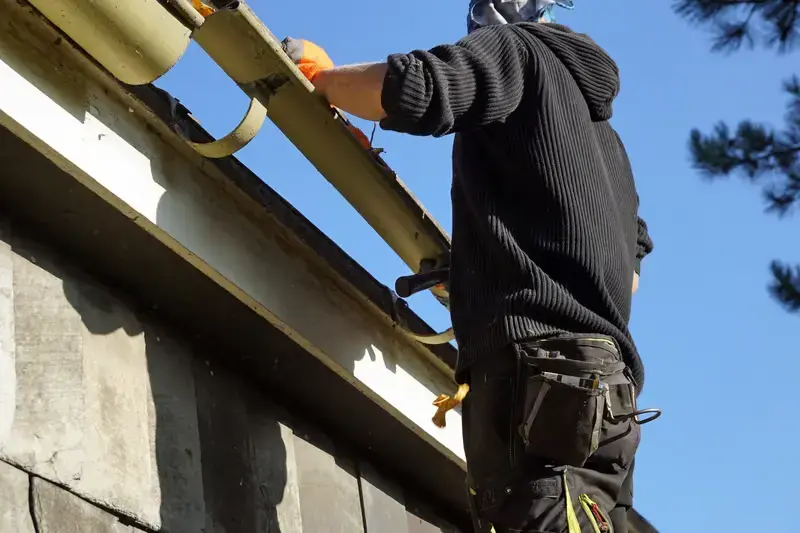
Before beginning, inspect the surrounding area and choose a stable working location. A sturdy ladder should be positioned on firm, level ground, away from electrical lines and unstable surfaces. Never lean too far sideways while working. Move the ladder instead.
Wear suitable gloves and protective eyewear because gutter debris may contain sharp metal fragments, insects, animal waste, and decomposing organic matter.
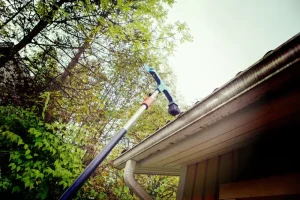
Begin by removing loose leaves and larger debris from accessible gutter sections. A small gutter scoop or suitable hand tool can make this process easier. Place the collected material into a bucket rather than dropping it around the foundation or onto landscaping.
Once the visible debris has been removed, check the downspout openings. Blockages near these connections are common because leaves and small branches often collect where water enters the vertical pipes.
If it is safe to do so, use a garden hose to flush the gutter channels with water. Observe whether the water travels toward the downspouts without collecting in particular sections.
A downspout that remains blocked may need additional attention. However, avoid forcing sharp objects into the pipe because they can damage connections or become lodged inside.
After cleaning, examine the system again for leaks, loose brackets, and standing water. This final inspection makes residential gutter maintenance more effective because cleaning and identifying structural problems happen together.
Inspecting Gutter Components Beyond Visible Debris
A gutter system contains several components that work together. Cleaning the channels without checking these parts may leave important problems unnoticed.
Gutter Channels and Seams
Examine the inside and outside of the gutter channels for cracks, corrosion, holes, and visible separation. Metal gutters may develop rust when protective coatings deteriorate, while some plastic systems can become brittle after prolonged exposure to sunlight and temperature changes.
Pay particular attention to seams and corners. These areas experience repeated water exposure and may eventually develop leaks.
Hangers, Brackets, and Fascia Boards
Gutter hangers support the weight of the drainage system and help maintain its position. Loose or damaged hangers can cause sections to sag, affecting water movement.
Check the fascia boards behind the gutters as well. If the wood appears soft, swollen, or discolored, moisture damage may already be present.
Simply tightening a bracket will not solve a problem if the underlying fascia board is deteriorated. In such cases, the supporting material may need professional repair.
Downspouts and Drainage Outlets
Downspouts carry water from the gutters toward the ground. Their openings should remain clear, and their connections should be secure.
Check whether water exits freely during testing. If the property has underground drainage connections, those outlets may also require inspection to identify blockages or damaged pipes.
Make sure the discharge point does not direct water toward neighboring properties, walkways, or vulnerable foundation areas.
Understanding Gutter Slope and Proper Water Flow
Gutters need an appropriate slope to move water toward their downspouts. If a section is too level or slopes in the wrong direction, water may remain inside after rainfall.
Standing water is more than a minor inconvenience. It can encourage mosquito breeding, attract insects, accelerate corrosion in susceptible materials, and increase the weight supported by gutter brackets.
Many conventional residential gutter installations use a slight downward slope toward the outlet. A commonly used installation guideline is approximately one-quarter inch of fall for every 10 feet of gutter, although the appropriate arrangement depends on the system design and manufacturer instructions.
Homeowners should not assume that every drainage problem requires adjusting the slope. A blockage, damaged hanger, deformed gutter, or improperly positioned downspout can produce similar symptoms.
When water repeatedly collects in one area, a qualified gutter professional can determine whether the issue involves alignment, structural support, or drainage capacity.
Proper slope checks are an important part of residential gutter maintenance, especially when older gutters begin showing signs of uneven water flow.
Choosing the Right Gutter Guards and Protection Systems
Gutter guards are designed to reduce the amount of debris entering gutter channels. They can be helpful for properties surrounded by trees, but they are not a replacement for regular inspection.
Different systems offer different levels of protection. Mesh guards use fine openings to limit the entry of leaves and larger debris. Screen guards have wider openings, while solid-cover systems direct water through specially designed openings.
The right choice depends on roof design, local vegetation, rainfall patterns, and the type of debris surrounding the property.
For example, a home surrounded by broad-leaved trees may benefit from a suitable mesh system. However, a property with many pine trees may still experience problems because small needles can collect on or pass through certain guard designs.
Poorly installed guards may also interfere with water entry or make cleaning more difficult. Before purchasing one, check whether the product is compatible with your existing gutter dimensions and roof configuration.
Even protected gutters need periodic inspections. Dirt, seeds, small leaves, and roof granules can accumulate over time.
A practical residential gutter maintenance plan treats gutter guards as an additional protective measure rather than a permanent solution.
Common Residential Gutter Maintenance Mistakes Homeowners Should Avoid
Even homeowners who regularly clean their gutters can make mistakes that reduce the effectiveness of their maintenance efforts. Understanding these problems can help prevent unnecessary repairs.
One common mistake is cleaning gutters only when they overflow. By that point, debris may have been accumulating for weeks or months. Regular inspections are more effective because they identify developing problems before heavy rainfall exposes them.
Another mistake is ignoring downspouts. Homeowners sometimes spend time cleaning the horizontal gutter channels but forget that vertical pipes can remain blocked. A clear gutter connected to a blocked downspout cannot drain properly.
Using excessive force during cleaning is another concern. Scraping aggressively with metal tools can damage protective coatings or puncture certain gutter materials. Gentle cleaning methods and suitable equipment are generally safer.
Some homeowners also assume that gutter guards eliminate maintenance requirements. Unfortunately, no protection system prevents every type of debris from entering or collecting around the drainage system.
Finally, postponing small repairs can become expensive. A loose bracket or minor joint leak may appear harmless, but repeated exposure to rain can gradually damage surrounding building materials.
Consistent residential gutter maintenance is about identifying problems early and responding before they affect other parts of the property.
When Should You Hire a Professional Gutter Maintenance Service?
Basic gutter cleaning may be manageable for some homeowners, but not every maintenance task is suitable for DIY work. The height of the property, roof design, accessibility, and condition of the drainage system all influence whether professional assistance is necessary.
Two-story homes, steep roofs, difficult rooflines, and gutters positioned above fragile landscaping can make cleaning particularly challenging. In these situations, professional technicians have access to appropriate equipment and experience working at height.
Professional inspections are also useful when gutters repeatedly overflow despite regular cleaning. The underlying problem could involve incorrect slope, insufficient drainage capacity, damaged joints, or poorly positioned downspouts.
A qualified contractor can inspect the system, identify the source of recurring problems, and recommend appropriate repairs.
Before hiring a service provider, ask about their inspection process, insurance coverage, repair experience, and pricing. Request a clear explanation of the work required rather than agreeing to unnecessary replacements.
Professional support does not mean homeowners should stop monitoring their gutters. A combination of routine visual checks and occasional expert inspections can make residential gutter maintenance more reliable.
How Regular Gutter Care Helps Save Money
Preventive maintenance is generally less complicated than repairing damage caused by prolonged water exposure. Although cleaning and inspections require time and sometimes professional assistance, they can help homeowners avoid larger repair projects.
Consider a property where leaves repeatedly block a downspout. During rainfall, water spills over the gutter and collects beside the foundation. Initially, the homeowner may only notice wet soil and a few exterior stains.
If the problem continues, moisture may affect nearby materials, contribute to basement dampness, or damage landscaping. What started as a simple drainage issue can eventually require several repairs.
Regular residential gutter maintenance helps interrupt this process by identifying blockages and drainage problems early.
Maintenance also supports the longevity of the gutter system itself. Removing heavy debris, addressing leaks, and repairing loose supports can reduce unnecessary stress on the materials.
The financial benefit depends on the property’s condition, local labor costs, gutter materials, and the extent of any existing damage. There is no universal savings figure, but preventing avoidable deterioration is a sensible long-term investment.
Creating a Simple Year-Round Gutter Care Routine
The easiest way to maintain gutters is to develop a routine that fits your property and local weather conditions.
Start by identifying the trees and environmental factors surrounding your home. Properties beneath large trees generally need more frequent inspections than homes in open areas.
Next, schedule seasonal checks during spring and autumn. Add inspections after severe storms, particularly when strong winds or heavy rainfall may have affected the roofline.
Keep a record of previous problems, including leaks, loose brackets, recurring blockages, and repairs. This information helps identify patterns. For example, if one corner repeatedly collects standing water, the problem may involve alignment rather than ordinary debris accumulation.
You should also inspect the areas where downspouts release water. Confirm that drainage remains directed away from the foundation and does not create erosion or persistent puddles.
Most importantly, avoid postponing repairs simply because the gutters still appear functional. Small defects can become more difficult to address when left untreated.
A consistent routine makes residential gutter maintenance easier to manage and reduces the likelihood of unexpected drainage problems.
Final Thoughts
Gutters may not be the most noticeable feature of a home, but their role in protecting the property is extremely important. They manage rainwater, reduce unnecessary moisture exposure, and help protect foundations, exterior walls, landscaping, and roof edges.
Effective residential gutter maintenance requires more than occasional cleaning. It involves seasonal inspections, checking downspouts, monitoring water flow, identifying structural damage, and responding to changing weather conditions.
Spring and autumn provide useful opportunities for detailed inspections, while summer and winter require attention to storm damage, heat exposure, and freezing conditions.
Homeowners should also understand when professional assistance is the safer option, particularly when working at height or dealing with complicated drainage problems.
A little attention throughout the year can prevent many avoidable issues. By making gutter care part of your regular home maintenance routine, you can protect your investment and help your drainage system perform reliably for years to come.
Frequently Asked Questions
1. How often should residential gutters be cleaned?
Most homes benefit from cleaning at least twice yearly. Properties surrounded by trees may require additional cleaning depending on debris accumulation and local weather conditions.
2. What happens if gutters are not maintained?
Blocked or damaged gutters can cause overflowing water, exterior stains, fascia deterioration, soil erosion, and moisture problems around foundations.
3. Are gutter guards worth installing?
Gutter guards can reduce debris accumulation and cleaning frequency. However, they still require periodic inspection because dirt, seeds, and small debris can collect over time.