Gutters have one job. They catch rainwater from the roof and guide it away from your house. When leaves, seeds, shingle grit, and dirt pile up, water has nowhere to go. It spills over the edges, backs up under roof shingles, and drops beside the foundation.
Over time, that water can rot fascia boards, stain siding, warp the soffits, flood basements, and kill plants beneath the eaves. In cold climates, standing water freezes and adds weight that can pull gutters away from the house or help ice dams form. Clogged gutters also become a home for mosquitoes, rodents, and nesting birds. Regular cleaning gutters is cheap insurance, because the cost of a clean-out is small compared with a repaired wall or a flooded basement.
How Often Should You Clean Gutters?
The classic rule is at least twice a year, in late spring and late fall. One national cost guide advises that gutters should be cleaned at least twice a year, especially in spring and fall, and sooner if you notice overflow, leaks, pests, or water pooling near the foundation.
Your trees change the schedule. According to a 2026 cost guide, average homes need cleaning one to two times a year, homes near oak trees two or more times, homes near pine trees up to four times, and homes with gutter guards at least once. Pine needles and small seeds work their way into tiny gaps, while oak leaves and flowers can create thick mats. If your house sits under a canopy, plan on more frequent visits. If you live in a dry climate with few trees, once or twice may be enough.
Seasonal Maintenance: What to Do and When
Gutters follow the calendar. A simple seasonal rhythm keeps the job manageable and prevents the largest clogs.
Spring and Summer
Spring is the time to clear away winter debris and check for damage. Winter ice and wind can loosen brackets, bend sections, or crack seams. After blossoms, seeds, and pollen fall from the trees, the gutters often fill again, so a second look in late spring is useful. Inspect for loose hangers, sagging sections, rust spots, and leaking joints.
In summer, do a quick visual check after storms. Look for overflow marks, wet spots on siding, and debris hanging from the edges. Trim back branches that overhang the roof, since they drop leaves and give squirrels easy access. Summer is also a good time for repairs, because dry weather makes sealant and fasteners easier to work with.
Fall and Winter
Fall is the big one. Wait until most leaves have fallen, then clean thoroughly. If you clean too early, a second round may be needed. Flush the downspouts, make sure water drains well, and confirm that the ends are directed away from the foundation. This is the best moment to prepare gutters for winter weather.
In winter, avoid climbing on icy ladders. Keep an eye out for ice dams, icicles that grow unusually large, and sagging sections. If you see them, address insulation and attic ventilation, since those problems often cause the ice. In mild winters, a quick mid-season check helps. If heavy snow is forecast, make sure gutters are free so melting water has a path.
Tools That Make Cleaning Gutters Easier and Safer
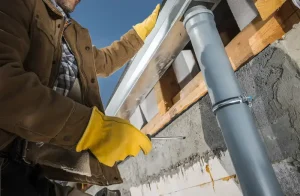
You do not need a truckload of equipment. A few well-chosen tools make the job faster and reduce risk. Start with a sturdy ladder rated for your weight plus tools, and a ladder stabilizer or standoff, which keeps the ladder from resting directly on the gutter and bending it. Heavy-duty waterproof gloves protect your hands from sharp edges, glass, and rotting debris. Safety glasses keep grit and splashes out of your eyes, and a dust mask helps if debris is dry and moldy.
For removing debris, a plastic gutter scoop is ideal, because it will not scratch metal and fits the curve. A small garden trowel also works. A bucket with a hook, hung on the ladder, holds the debris, or you can lay a tarp on the ground to catch it. A garden hose with a spray nozzle flushes the last bits and tests the flow. A plumber’s snake or flexible auger can clear stubborn downspout clogs.
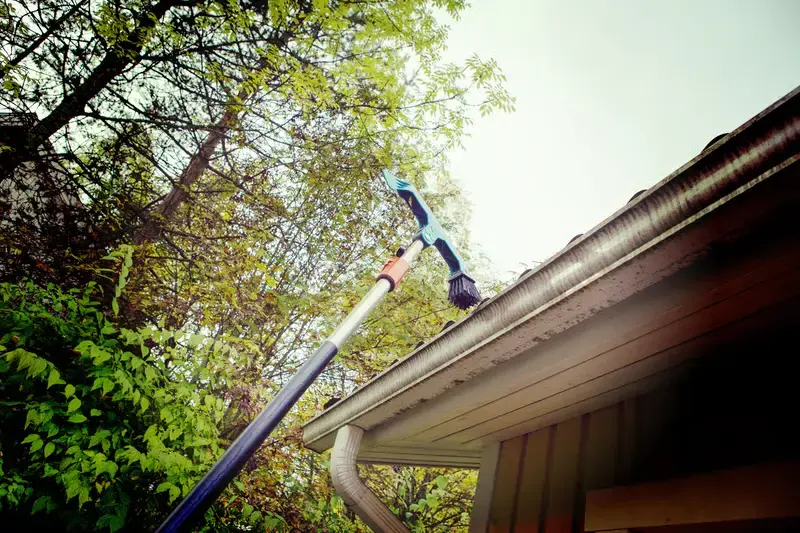
Specialty tools exist. Telescoping poles with wands and cameras let you clean from the ground, and some leaf blower attachments reach gutters. Wet-dry vacuums with extension tubes can suck up dry debris. These tools can reduce ladder time, though they work best on lighter debris and single-story homes. Choose what fits your house and budget.
Safety First: Ladders, Roofs, and Electricity
The most dangerous part of cleaning gutters is not the dirt. It is the fall. One cost guide notes that more than 500,000 people seek treatment for ladder-related injuries every year. The National Institute for Occupational Safety and Health also notes that many ladder-related injuries occur at home, not only at work.
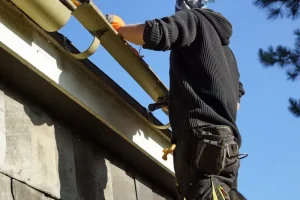
Set up your ladder carefully. Place it on firm, level ground, and use a stabilizer or a helper to hold the base if possible. For an extension ladder, a common guideline is to place the base one foot away from the wall for every four feet of height. Make sure the top extends above the gutter and is secured. Always keep three points of contact, two hands and a foot or two feet and a hand, and do not carry heavy loads while climbing. Keep your belt buckle between the rails, and never lean sideways. Move the ladder instead of stretching.
Check the weather and the surroundings. Do not work on wet, windy, or icy days. Look for power lines, which are a deadly hazard, and keep the ladder at least ten feet from them. Never use a metal ladder near wires. Wear shoes with good grip, and avoid working alone if you can. Let someone know when you are climbing.
Know your limits. If your home has two or more stories, a steep roof, or hard-to-reach gutters, hiring a professional is usually the smarter choice. Pros carry insurance and equipment, and they can often work faster. There is no shame in deciding that a job is not worth the risk.
Step-by-Step: How to Clean Your Gutters
Begin by laying down a tarp or planning where debris will fall. Put on your gloves and glasses. Start near a downspout so you can work away from it, and set up the ladder so you do not overreach.
Scoop out the loose debris and drop it into your bucket or onto the tarp. Work in small sections, moving the ladder as needed. Remove thick, wet material by hand first, then use the scoop for finer sludge. Do not toss debris on the ground near the house, because it will clog downspouts later or become a mess. Place it in compost or yard waste, depending on your local rules.
Once the bulk is gone, flush the gutters with a hose, starting from the end farthest from the downspout. Watch how the water flows. Water should run smoothly toward the downspout without pooling. If puddles remain, the gutter may be sagging, and you may need to adjust the hangers. Then flush the downspouts. If water backs up, there is a clog. Try running the hose in reverse from the bottom, or use a plumber’s snake from the top.
Finish by inspecting. Look for cracks, rust, loose brackets, and leaking seams. Tighten screws, replace missing fasteners, and reseal joints with exterior-grade gutter sealant. Check that the downspout extensions or splash blocks carry water several feet away from the foundation. Rinse your tools, store them, and write the date in a notebook or calendar so you remember the next cleaning.
Do Gutter Guards Eliminate Cleaning?
Gutter guards, covers, screens, and filters can reduce debris, but they do not eliminate maintenance. Fine particles, seeds, and shingle grit can still pass through or build up on top. Some designs collect pine needles, and some trap water. One guide notes that guards reduce cleaning from twice a year to once, and that homes with gutter guards need cleaning at least once per year.
If you choose guards, buy quality products and have them installed well. Inspect them regularly, and clean the surface with a brush or hose. Guards make sense for homes under heavy tree cover or for owners who cannot climb ladders safely. They are not magic, and they do not replace an annual check. Consider your tree types, budget, and local weather before deciding.
DIY or Professional? Cost and Value
Costs vary by region, home size, and condition. A 2026 pricing guide reports that the average cost of gutter cleaning is around $168, with most homeowners paying between $119 and $234, and contractors often charging $0.95 to $2.25 per linear foot. Two-story homes cost more because they need specialized equipment and training, and three-story homes can cost much more.
DIY costs very little. A scoop, gloves, a hose, and a stabilizer might cost from twenty to a hundred dollars. The real price is time and risk. For a small, single-story home with easy access, DIY is realistic. For tall houses, steep roofs, or heavy clogs, professional help may be worth the cost, especially when you consider the potential for injury and the damage clogged gutters can cause. Get at least two quotes, verify insurance, and ask what is included, such as downspout flushing and debris disposal.
A Real-Life Example of Doing It Right
Here is a composite story based on common experiences. A couple owned a two-story house surrounded by oak and maple trees. For years, they cleaned the gutters once in late fall and ignored them the rest of the time. Every spring, water spilled over a corner above the front door and stained the siding.
After talking with a gutter professional, they changed the schedule. They added a late-spring cleaning, extended the downspout away from the foundation, and trimmed back the branches over the roof. They also hired a pro for the high sections and handled the lower sections themselves with a scoop and stabilizer. Within a year, the stain disappeared, the basement stayed dry, and the gutters lasted longer. The lesson was simple. A little routine beats a big repair, and cleaning gutters on a schedule is cheaper than fixing damage.
Expert Insights Worth Remembering
Roofing contractors and home inspectors repeat a few ideas. First, look up at least twice a year, even if you do not climb. Signs such as overflow marks, peeling paint on fascia, or plants growing from the gutter are clear signals. Second, check drainage on the ground. Gutters can be spotless and still cause trouble if the downspouts discharge beside the foundation. Extensions should carry water several feet away, and the soil should slope away from the house.
Third, treat safety as part of the job, not an afterthought. Experts suggest working slowly, using proper equipment, and skipping the task when conditions are poor. Fourth, address root causes. If gutters clog constantly, trimming trees, adding guards, or adjusting the pitch may help. Fifth, keep records. Write down dates, repairs, and contractor details. If you have persistent leaks, sagging, or rot, consult a roofer or gutter specialist, because hidden damage may be present. Local conditions vary, so ask professionals in your area about the best schedule.
Common Mistakes to Avoid
The most common mistake is waiting until something goes wrong. Gutters are easy to forget, and problems stay hidden until storms reveal them. Another mistake is using the wrong ladder setup, such as leaning directly on the gutter, placing the ladder on soft ground, or overreaching. These habits cause falls and bent gutters.
Others use pressure washers or metal tools that damage gutters, or they leave debris on the roof to wash down later. Many people clean the gutters but ignore the downspouts, then wonder why water still overflows. Some forget to check for damage and miss loose brackets or leaks. Another error is buying gutter guards without understanding their limits. Finally, many homeowners try to do dangerous work alone. Be honest about your abilities, and bring in help when needed.
Final Thoughts
Cleaning gutters is not glamorous, but it is one of the most valuable chores you can do for your home. It protects the roof, the walls, the foundation, and the garden, and it saves money that would otherwise go to repairs. Elena, the homeowner from our opening story, now marks two weekends on her calendar every year. She keeps a scoop in the garage, a stabilizer on the ladder, and the phone number of a good professional for the high sections. When the next storm comes, she watches the water slide neatly down the downspout and smiles. Start with a quick look this week, choose a safe method, and make cleaning gutters a rhythm of your home, not a rescue mission.